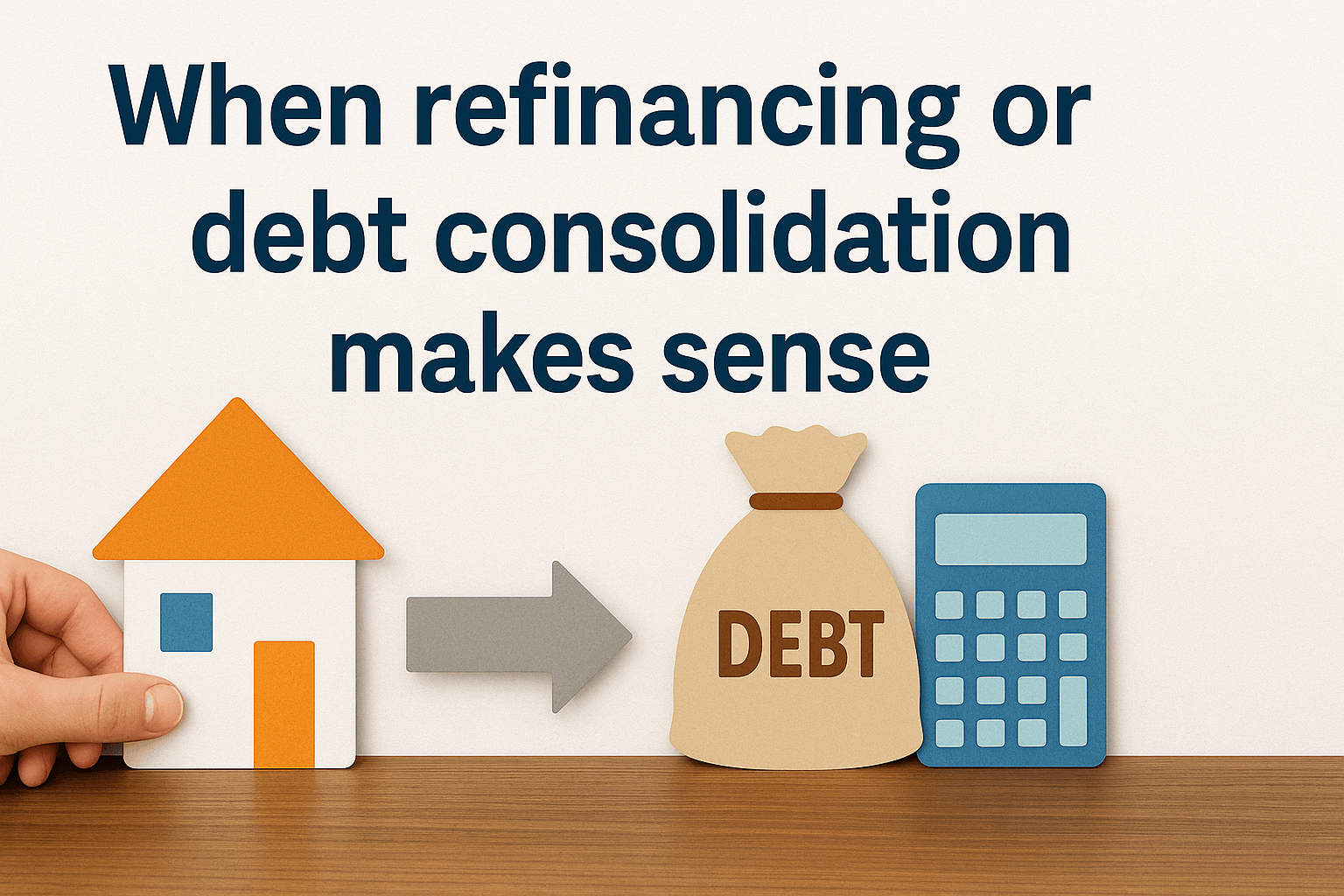
Feeling buried by debt – loans, cards, steep interest – is rough. Maybe you’ve considered streamlining things with refinancing or consolidation? They both aim to ease the burden, yet timing is crucial; so is grasping what each actually does. Knowing this helps you choose wisely.
What Is Refinancing
Essentially, refinancing swaps your current loan for a fresh start – a new loan with altered conditions. Folks do this typically to snag a better interest rate, ease their monthly bills, or adjust how long they have to pay things back.
When mortgage interest rates fall, people often swap out their existing loan for a new one – potentially freeing up cash each month. Similarly, folks with car payments or other loans may trade them in too, snagging more favorable conditions thanks to a boosted credit rating or simply because rates have dipped.
What Is Debt Consolidation
Imagine swapping a bunch of bills for just one. Debt consolidation does that – it rolls what you owe into a fresh loan, hopefully with better terms. Consequently, managing money becomes simpler with a single monthly payment.
You might consider a personal loan, a different credit card to move balances, or tapping into your home’s equity. Getting everything together makes tracking expenses easier, potentially saves money on interest – provided you handle it well – while also speeding up debt repayment.
When It Makes Sense
- You Have High-Interest Debt
If you are paying 20 percent or more in credit card interest, consolidation can save you significant money over time. Moving that debt to a lower-rate loan can free up more cash for savings or other priorities. - Your Credit Score Has Improved
A higher credit score can qualify you for better rates and terms. If your score has increased since you took out your original loans, refinancing might reduce your monthly payments or shorten your repayment timeline. - You Want Simpler Payments
Managing multiple debts can be stressful. Consolidation can help you stay organized by turning several payments into one predictable monthly bill. - You Have a Plan to Avoid New Debt
Consolidation works best when it is part of a long-term plan. It will not help if you continue adding new debt. Commit to responsible spending before combining accounts.
When It Might Not Be Right
A shaky financial situation – either poor credit or overspending – could actually worsen with debt consolidation. Certain loans tack on charges or stretch out payments, ultimately costing you more despite seeming affordable each month. So, shop around diligently first.
Final Thoughts
Refinancing and debt consolidation can be powerful tools for financial relief, but they are not one-size-fFeeling squeezed by bills? Refinancing or combining debts might help – however, there’s no magic bullet. Used smartly, these options could mean less interest, easier payments, alongside some wiggle room each month. Think of them as pieces of a bigger strategy, rather than instant rescues.